
Blog · Families · 8 min
Parents addicted to phones: why the example beats the rule
If you worry about being on your phone too much around your children, one thing moves the needle more than any rule you set them: what they watch you do. Children copy the gesture, not the speech. And the good news is that it's almost never addiction. It's almost always autopilot, and autopilot can be changed.
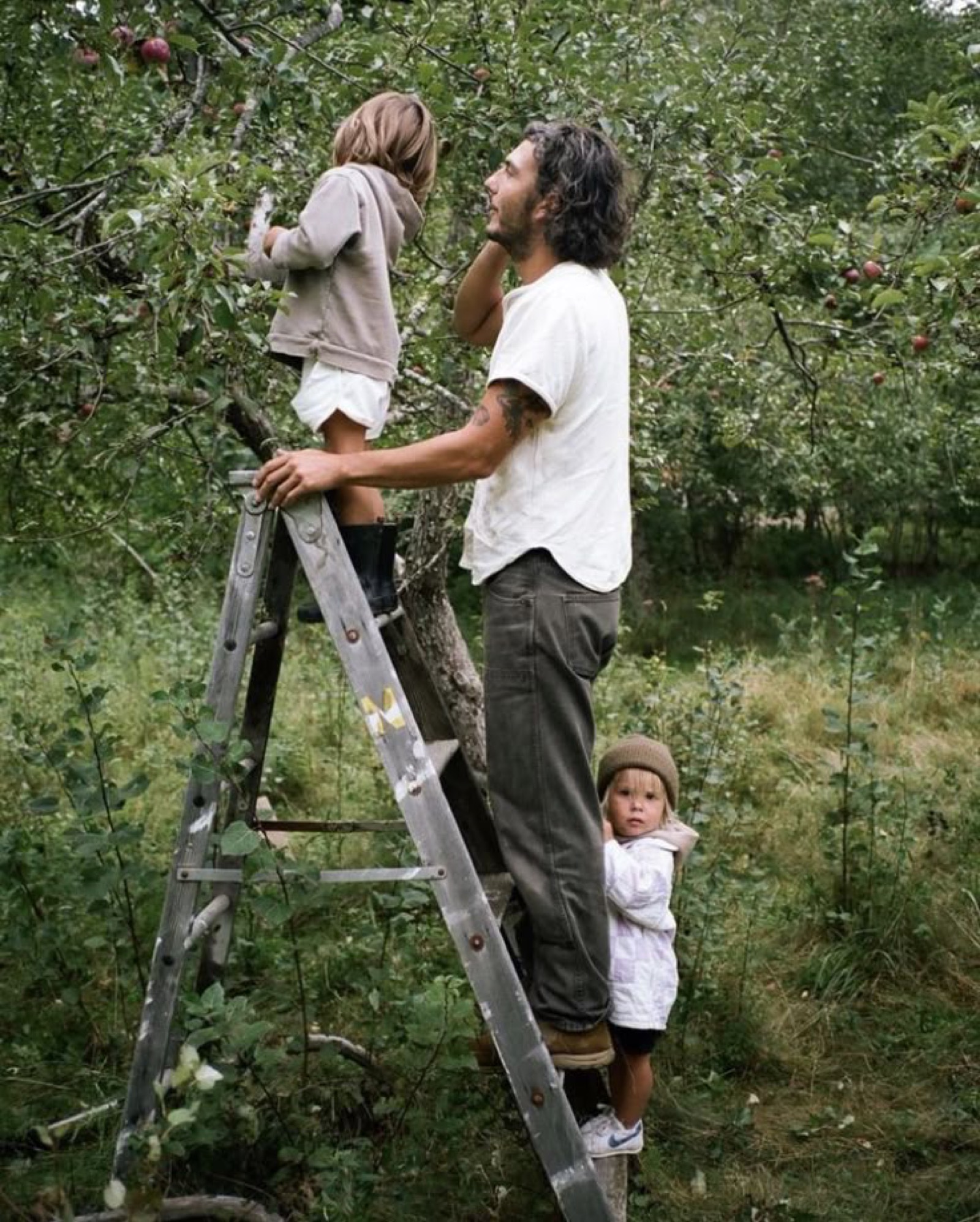
Does my child really copy how I use my phone?
Yes. Children learn by watching, not by being lectured. If they see you reach for the phone every two minutes, that's the rule they take in, whatever you say afterwards about putting the tablet down.
This isn't a nice theory. It's what teenagers say themselves. In Common Sense Media's 2019 report on US parents and teens, close to 40% of teenagers said they thought their parents were addicted to their phones, ten points up on the same question in 2016. Note the direction of that arrow. It's the children reporting on the adults.
Translated into your house: you aren't competing against your child's phone from the outside. You're both in the same scene. The five-year-old watching a parent eat breakfast with one hand on the toast and the other on Instagram isn't receiving a rule about screens. They're receiving an example. And the example wins every time.
Which is why "set an example with your own phone use" isn't a line from a parenting manual. It's probably the strongest lever you have. It's also the least comfortable one, because it puts you first in the queue.
There's a mechanical reason it beats rules, too. A rule is a sentence, and a sentence only applies where it was said. What they see you do is data, and data applies everywhere. You can forbid phones at the table and still teach, twice a day, that a screen is what an adult reaches for when they're bored, tired, waiting, or slightly uncomfortable. Nine years of that is a curriculum. The table rule is a footnote.
Am I addicted to my phone, or just on autopilot?
Almost certainly the second one. Addiction is a clinical word, and a big one. What happens to most parents is simpler and sneakier: you pick up the phone without having decided to. The hand goes on its own.
This is the part nobody leads with, because it doesn't make a headline. The problem isn't that you don't want to be present. You do. The problem is the automatic gesture: the phone buzzes, or doesn't even buzz, and your hand is already on it before your head has had an opinion. That's not a character flaw showing up. That's a habit doing exactly what habits are for, which is running without supervision.
Tell yourself "I'm addicted" and you're left with guilt and no plan. Tell yourself "I'm on autopilot" and you already know what the enemy is: the gesture, not you.
The reframe matters more than it sounds. Tell yourself "I'm addicted" and you're left with guilt and no plan. Tell yourself "I'm on autopilot" and you know what you're up against: the gesture, not you. And there are concrete things you can do to an automatic gesture.
How does it affect my child when I'm on my phone around them?
Mostly in the small moments, not the big scenes. It isn't the day you spend eight hours glued to the screen. It's the "I'll read you the story in a second" while one eye checks a notification.
There's a name for that, parental phubbing, and there's a decent body of research on what it does. We've put it in one place rather than repeat it here: what parental phubbing does to a child. The short version, honestly stated: one glance at your phone doesn't break anyone's childhood. What accumulates is the pattern, day after day, of "I'm with you, but not quite".
The good news is that the scene gets repaired in the same place it breaks: in the small moment. The bedtime story with no phone in your hand. The walk to school looking out at the same things. Ten minutes at the park without checking anything. You don't have to disappear from digital life. Those particular stretches just have to genuinely belong to them.
So what do I fix first?
You start with you, not with them. This is the turn most articles on the subject won't take: before you set the child a single rule, you sort out your own gesture. Because if you sort out yours, the rule is redundant. You're already teaching it.
An honest plan for the parent:
- Choose your sacred moments. Don't promise "I'll use my phone less", because that isn't a thing anyone keeps. Choose two or three specific, non-negotiable windows: dinner, the story, the first half hour after you get home. In those, the phone doesn't exist.
- Make the gesture visible. Put the phone in a fixed spot, far away, in another room. Let your child watch you put it there. That gesture does more than any conversation about screens.
- Go after the automatism, not your willpower. This is where everyone trips.
If you want that plan in full, with the weekday version of each step, it's in how to stop using your phone in front of your kids. What follows here is the third step, because it's the one that decides whether the other two survive the week.
Why does my willpower always lose?
Because you're asking it to win a contest that's decided in half a second, and it isn't that fast. The urge to pick up the phone is quick. Your conscious decision arrives late. And at nine at night, worn out, your willpower isn't looking for a fight.
This is the blind spot in nearly every piece of advice you'll read: "put your phone away when you're with your kids". Fine. But who puts the phone away, when the person who has to put it away is the same person who wants to pick it up? The screen time tools built into the phone have the same flaw. You turn them off yourself, in two taps, and you know it. You give yourself permission at the exact moment you're least able to say no. Barriers that depend on your willpower fail precisely when you need them: at the instant of the impulse.
The answer isn't more willpower. It's not needing any. It's putting something between your hand and the app that doesn't care what kind of day you've had.
How a physical barrier cuts the autopilot
That "no" doesn't come from your discipline. It comes from the setup.
This is where a physical barrier you can't clear in two taps comes in. The idea is plain: if reopening Instagram takes a real, conscious action, that bit of friction hands back the decision autopilot had taken off you.
Monk is a physical device, the size of an AirTag, magnetic, no battery, that pairs with your iPhone. You choose which apps to block, the two or three that eat the hours, and once they're blocked, wanting to open them isn't enough. To get back in you hold the phone to the Monk and tap it. Every time. No soft unlock: no ignore-for-today button, no code you already know, no shortcut at nine at night. The app does hold three emergency unlocks for genuine emergencies, and they are finite — a spare key, not a back door.
It isn't unbreakable and we won't sell it as such. iOS doesn't allow a lock nothing can get past, and an adult who really wants in will get in. What it does is meet the automatic hand with a wall instead of a green light. Not an "are you sure you want to continue?" screen that you dismiss without reading, but an action that makes you stop and ask whether you actually want to get up and fetch the thing. Most of the time the answer is no. And that no doesn't come from your discipline. It comes from the setup.
There's a second effect that lands right on top of everything above. When your child sees you put the phone down and place a barrier around your own apps in order to be with them, you aren't delivering a sermon about screens. You're handing them the example as an object. Consistency they can see, rather than consistency you claim.
And it's worth saying flatly: this isn't about having more backbone. Every app on your phone is designed by whole teams to hold your attention. You don't beat that with New Year's resolutions, you beat it by changing the room. The dinner rule isn't held up by your discipline. It's held up by an object that stays in the kitchen.
What Monk is, in three steps
Monk isn't against phones. A phone is a tool. It's against the hours that go without you deciding they should, and in this case against the specific gesture of checking the screen when you'd rather be with your children.
Here's how it runs:
- You choose your apps. Block the ones that take the day: social, messaging, whatever your hole is. You can schedule sessions, dinner or story time for example, so they lock themselves at that hour.
- You give it a fixed spot in the house. Monk is a physical device the size of an AirTag, magnetic, no battery. The fridge, the hallway, a shelf in the living room. If the Monk stays in the kitchen, the decision has already been made. It works on iPhone only, iOS 16.2 or later.
- You tap it when you decide to. To reopen a blocked app you hold the phone to the Monk. That second of friction is what breaks the automatism and hands the decision back.
And in case you were wondering: calls and the camera always work, it works offline, and you get three emergency unlocks for genuine emergencies. It doesn't monitor anyone and it doesn't read anything. It just holds the rule you decided to set.
Frequently asked questions
Isn't the iPhone's own Screen Time enough?
Screen Time is good for seeing how much you use your phone and for setting reminders. The trouble is the moment of the impulse: when the "limit reached" notice appears, you can tap "ignore" yourself, twice, and you're through. It depends on your willpower at the hour you have least of it. The difference with Monk is that there's no such button. Without tapping the disc, the app doesn't open.
I feel awkward about my kids seeing me "need" a gadget to put my phone down.
It works the opposite way to how you fear. Them watching you put a barrier around your own apps in order to be with them is one of the more consistent things they can see. You're not telling them phones are bad, you're showing them that you work on your own limits too. That teaches more than any rule, and it gives them permission to do the same later on.
What if I genuinely need my phone for something urgent at dinner?
Calls and texts are never blocked, so you're always reachable. What gets blocked is the apps you chose, the ones that swallow time. If you need one of those for something real, you tap the Monk and you're in. It doesn't strand you. It makes you stop for half a second and decide whether this is genuinely urgent or just the hand going on its own.
Will this actually cut my phone use around my kids, or is it another promise?
It doesn't promise magic. What it does is narrow: it removes the automatic reach for the phone, which is the bulk of the problem at home. It doesn't ask you for more willpower, it asks you to stop needing any. If the app is blocked and the Monk is in the kitchen, the impulse dies somewhere along the corridor. The change isn't held up by your discipline, it's held up by an object.
Start with you
Before you set your children a single new rule, sort out your own gesture: get back the dinners, the story, the stretches you meant to be in and were only half in. Not with more willpower, but with a barrier you can't clear in two taps. Your children don't need you to take their phone away. They need to see you without yours. If you want to go further, read how to stop using your phone in front of your kids and how to stop checking your phone without relying on willpower.
See how Monk worksA physical action · No willpower needed · Calls always get through · iPhone only, ships within Spain today


