
Blog · Families · 7 min
Phones at the table: how to build phone-free zones at home that people actually respect
"No phones at the table" doesn't survive on good intentions. It needs a real barrier: a fixed hour, a place to put the phone that isn't within arm's reach, and something that stops anyone picking it up "just for a second". A phone-free zone holds when staying off the phone doesn't depend on everyone remembering to, every single night.
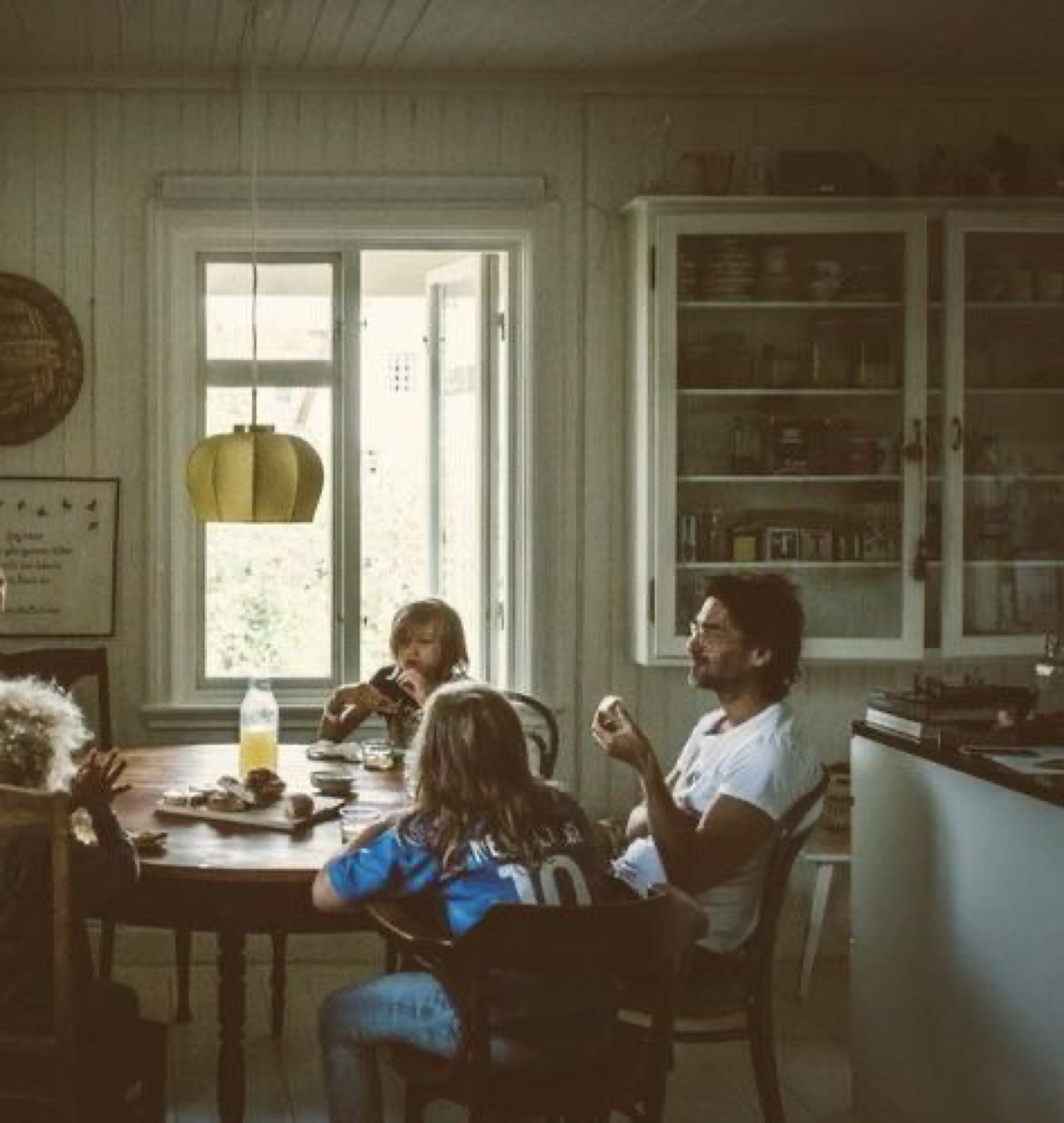
If you've tried to run phone-free meals at home, you know how it goes. The rule lasts three days. Then someone checks a message "for a second", and by the following week everyone is back to eating with a phone beside the plate. That isn't a discipline problem. Willpower on its own doesn't hold out against a device engineered to call you back every few minutes.
So here's how to build screen-free zones and moments that genuinely hold, without lectures and without turning dinner into a standoff.
Why phones shouldn't be at the table
Because the table is one of the few stretches of the day when a family is in the same place looking at each other, and a phone breaks it without anybody choosing to. This isn't a moral point. Attention doesn't split: you're either in the conversation or you're in the screen.
For a lot of households, the meal is the only fixed point of contact all day. You find out how school went, things get sorted, someone tells a stupid story that holds everyone together. Once a phone is on the table, that conversation cuts out every time the screen lights up. Nobody even has to reply. A buzz is enough for a head to leave the room.
Paediatricians land in the same place. The American Academy of Pediatrics puts screen-free zones near the top of its family media advice, and names bedrooms and mealtimes as the two places to start. Not to punish the phone. Because eating with a screen tends to mean eating worse, noticing less of what you're eating, and talking to each other less.
What counts as a phone-free zone at home?
A phone-free zone is a place or a moment the phone doesn't enter, for anyone, adults very much included. Mealtimes and bedrooms overnight are the two that pay off fastest. The trick is that the rule belongs to the system rather than to whatever mood the house is in that evening.
The idea is straightforward. Some parts of the house work better without screens: the table while people are eating, the bedroom when it's time to sleep. What nobody mentions is how hard it is to hold. Naming the zone is easy — "no phones at the table" takes four seconds. Keeping it on night eleven, when you're tired and the phone buzzes, is another thing entirely. Which is why most of these rules die somewhere around good intentions.
The catch: the adult breaks it first
Here's the uncomfortable part, and nobody's pointing at you. It's usually a parent who breaks the rule first. Not out of hypocrisy — the hand goes to the phone on its own, pure autopilot, in the ten seconds between courses. But it has a practical consequence: the moment you check your phone at the table, "no phones here" stops existing for your child. Kids copy what they see, not what they're told. If you want the table to be a phone-free zone, the zone starts with your handset.
You can see the same pattern outside the house. A direct-observation study of 1,616 children aged roughly four to ten, carried out in fast food restaurants across Barcelona and published in Gaceta Sanitaria, found children using smartphones in 28.1% of the meals observed. Nearly one in three. The detail that says the most: use was significantly higher when there was no interaction between the adult and the child. Translated — when the grown-up checks out, the screen comes up.
The enemy isn't the phone. It isn't your child. It's the automatic reach for a screen nobody decided to pick up.
How to make phone-free meals actually hold
These work, and none of them costs anything. Start here before you do anything else.
Set an hour, not an intention. "No phones at dinner" is vague. "Between eight and nine, phones aren't touched" is a rule. A brain needs a clear start and a clear end, or it renegotiates every night.
Give phones a physical home, out of reach. A drawer, a shelf by the front door, a box in another room. What matters is that it isn't within arm's length. Face down on the table doesn't count — it's still in view, and it still buzzes.
Make the rule universal. Adults included, no "it's work" exemptions. A phone-free zone with an exception for one parent isn't a zone, it's a rule for the children. Those collapse on their own.
Start small. You don't have to reclaim the whole house on day one. One meal a day, or the last hour before bed. One moment that genuinely holds beats five that don't.
Have a plan for when the phone calls. Because it will buzz halfway through dinner. The answer isn't more willpower. It's making the reach cost something in that exact second. This is where most advice on the subject stops short.
The twist: the phone basket is a placebo
Search for phone-free meals and you'll meet the same suggestion everywhere: put all the phones in a basket in the middle of the table. It sounds good. Then you try it.
The basket blocks nothing. The phone is still on, still buzzing, still calling you from a foot away. You feel the vibration, you think "that might be important", you reach over "just to see who it is", and dinner is over. You went back to the screen and took everyone with you.
The basket appeals to your better nature. And your better nature at nine at night, after a long day, with a phone humming thirty centimetres away, is not a fair match for a device built in Silicon Valley precisely so that you pick it up.
The enemy, and this is the part that matters, isn't the phone. It isn't your child. It's the automatic reach for a screen nobody decided to pick up. That reflex is what breaks the meal, and you don't beat a reflex with more discipline. You beat it by putting something physical in the way.
The mechanism: a phone-free zone that switches itself on
The rule stops depending on how you feel that night and becomes part of the furniture.
This is where Monk fits, and it fits this problem exactly.
Monk is a physical device — about the size of an AirTag, no battery, magnetic on the back — that closes the apps you choose on your iPhone. What matters for the table is this: you can schedule a session, say eight o'clock, so the apps that eat your dinner close on their own at that hour. The phone-free zone starts without anyone having to remember it.
Then the phone buzzes, your hand goes for it on its own, and it meets the barrier. Reopening a closed app means getting up and tapping the Monk. Every time. That handful of seconds — stand up, walk over, tap — is exactly the gap you need to think "that wasn't important" and sit back down.
That's what the basket can't give you. A basket puts the phone somewhere else and leaves it alive. Monk makes the table a phone-free zone in the literal sense: it isn't that the phone is far away, it's that the apps don't open even if you're holding it. The rule stops depending on how you feel that night and becomes part of the furniture.
And yes, it settles the example problem too. If your apps are closed through dinner, there's no debate about why one person gets an exemption. The table is phone-free for everybody, starting with you.
What Monk is, and how to set up your phone-free zone in three steps
Monk is the physical barrier between you and the apps taking the parts of the day you actually wanted. It isn't another screen time app — the fix can't live inside the problem. It's an object that stays in your kitchen. iPhone only, iOS 16.2 and up. There is no Android version. One payment, no subscription.
It doesn't promise magic. There's no such thing as a 100% unbreakable block on iOS, and we're not going to tell you otherwise. What Monk kills is the automatic reach, which is the thing that breaks the meal. Not through willpower, yours or anyone else's at that table — through a physical gesture nobody has to renegotiate every night. Calls and texts never close, and there are three emergency unlocks for the days that need them.
Setting up the zone at the table is about as complicated as this:
- Give it a fixed home. Monk is magnetic: stick it to the fridge, or wherever you'll pass at the end of the day. That fixed spot is half the barrier. If the Monk lives in the kitchen, the decision has already been made.
- Pick the apps and the hour. Tick the ones that creep into dinner and schedule the session — mealtime, and the last hour before bed. They close on their own when it comes round.
- Tap to come back, when you decide to. Dinner ends, you want your phone, you tap the Monk. You're the one choosing, rather than the buzz.
Common questions
What if I genuinely need my phone for an emergency during dinner?
Calls and texts are never blocked, so you're always reachable for anything that matters. Monk closes the apps you chose — social, messaging, games — not the phone itself. There are also three finite emergency unlocks for the day you need one. The point isn't to cut you off. It's to remove the automatic scrolling that breaks the meal.
Isn't it easier to just leave the phone in another room?
It's a good first step and we'd recommend it. The problem is it works for a few days and then drifts, because it depends on you remembering and on you being in the mood that particular evening. Monk takes it off your memory: the session starts by itself at the hour, and the apps don't open even with the phone in your hand.
Will it get my kids off their phones at the table too?
Yes, and not as a parental control: it doesn't monitor, it doesn't report, it doesn't read anyone's messages. You don't run it on them either — they run it themselves, tapping out for dinner exactly as you do, with the same tag from the kitchen. When the rule is identical for everyone, hunting for the back door stops being interesting. Even so, the strongest thing you can do for the table is put your own phone down first. They copy what they see.
What if my partner won't join in?
Don't wait for them. Start with your own phone: close your apps for the dinner hour and let the meal make the argument. Nobody in a house does what they're told and everyone does what they see, and a dinner where you're fully present is noticeable within a couple of days. Joining in stops being a debate and becomes an invitation. The rule isn't held up by a speech every night. It's held up by an object stuck to the fridge.
Make dinner a phone-free zone for real
"No phones at the table" is a good rule. The rule was never the problem — keeping it was. You can keep betting on willpower at nine at night, or you can put something in the way that holds when the phone buzzes. For the whole family, starting with you. If you want to understand why example carries more weight than any rule you set, read how being on your phone in front of your kids lands harder than you think. And to work on your own use before anyone else's, here's what to do if you're a parent hooked on your phone, guilt not included.
See how Monk worksNo monitoring · No code to guess · Calls always work · Currently shipping within Spain — join the list for the UK and EU


